
In the first quarter of 2025, the New York Poison Center managed 10,291 exposure cases across the state.
- 71% of cases were safely handled on-site (at home or in the workplace).
- 29% required care at a health care facility.
- The majority of exposures were unintentional and involved children under age 6.
During this same period, the Poison Center also responded to 1,634 information calls related to medications, poisonings, environmental concerns, and prevention education.
Ongoing Concern: Cannabis Edibles
Cannabis-related exposures — especially from edible products — continue to be a serious concern. These cases are actively tracked, and prevention efforts are focused on reducing accidental poisonings, particularly among young children.
Prevention Starts at Home
Simple steps can make a big difference:
- Store medications and cannabis products up high and out of sight.
- Keep products in their original, child-resistant packaging.
- Never refer to medicine as “candy.”
- Save the Poison Center number: 1-800-222-1222.
Safe storage protects children, reduces emergency visits, and helps prevent accidental poisonings in our communities.
Sharps
Many people manage medical conditions like diabetes at home using syringes and lancets. This creates medical waste that must be handled safely to protect sanitation workers, prevent injuries, and reduce the risk of misuse.
DEC strongly recommends that self-administered medications with attached needles, or “sharps,” be disposed of at hospital-based collection programs. All hospitals in New York State (except for federal facilities) are required to collect sharps from households.
Medications given by injection with a needle may be disposed of in the trash
Syringes without attached needles may be disposed of in household trash as described above
Do NOT dispose of sharps in drug collection receptacles or in drug mail-back packages
Prescription Abuse Statistics
35.8% of American adults used a prescription drug – legally or not – within the past 30 days. Healthcare specialists generally agree that a high rate of use and availability drives reported rates of prescription drug abuse, addiction, and ultimately, overdose.
Prescription Drug Misuse by the Numbers
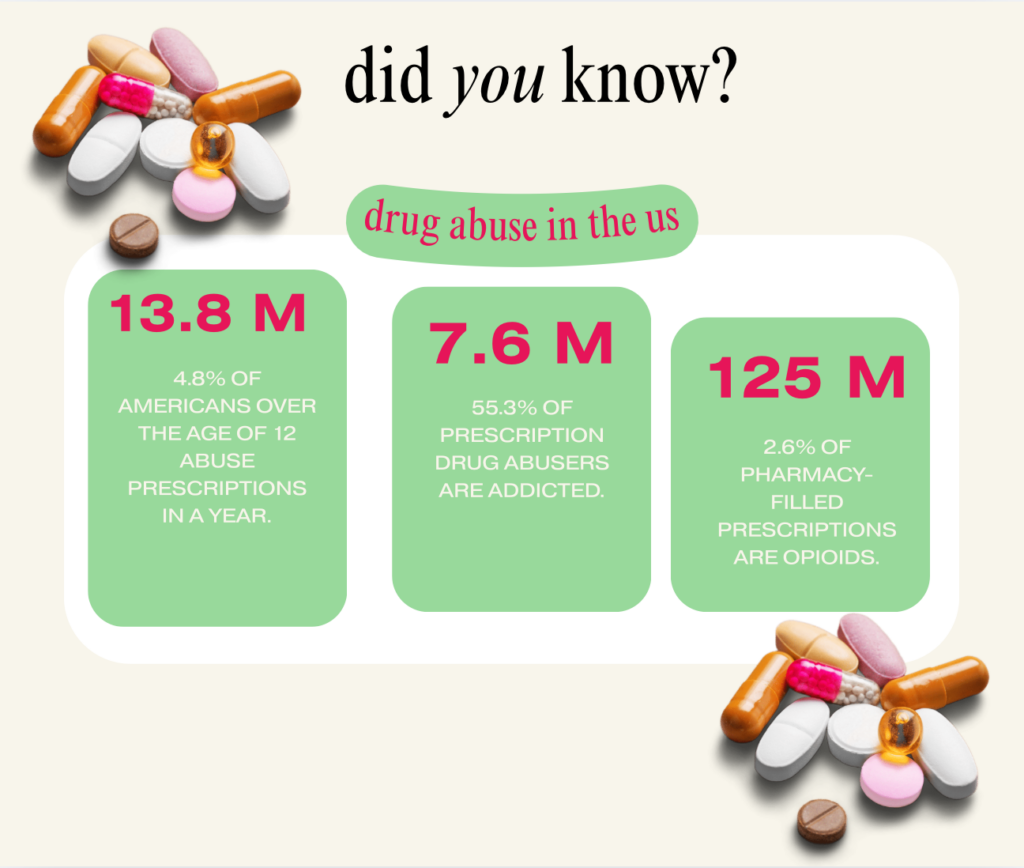
- 13.8 million people misuse prescription medications each year.
- In the past year, 1.5 million people misused prescription pain relievers for the first time, accounting for 19% of all annual misusers.
- First-time misuse is also common among other prescription drugs:
- 15.9% of stimulant misusers
- 18.4% of tranquilizer misusers
- 22.3% of sedative misusers
- Overall, 4.8% of Americans age 12 and older report misusing prescription medications.
- Prescription misuse has declined 4.4% since 2023, when 14.4 million people reported misuse.
- Fewer than 1 in 10 people who misuse prescription pain relievers do so with the goal of getting high.
- However, 7.6 million people (55.3%) who misuse prescriptions meet criteria for addiction.
Psychotherapeutic Prescription Drug Abuse
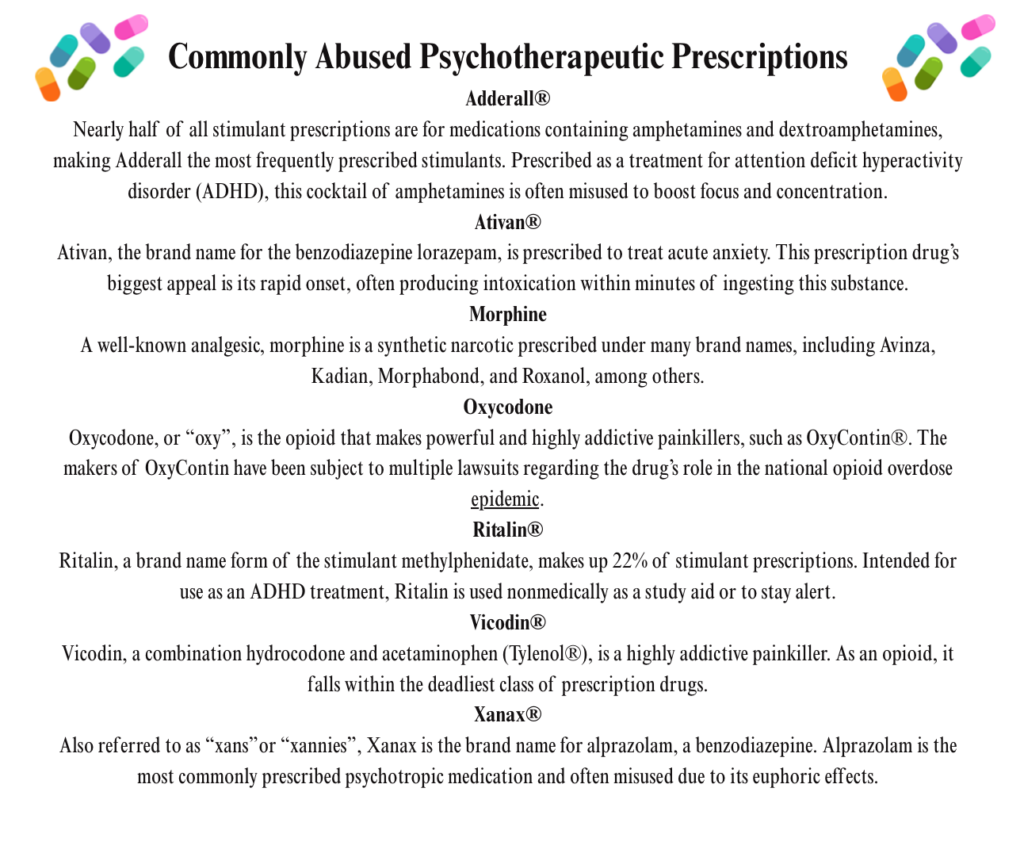
The prescription medications most commonly misused are classified as psychotherapeutic drugs — medications prescribed to treat mental, emotional, or physical health conditions.
These drugs generally fall into four categories:
- Pain relievers (opioids)
- Stimulants
- Sedatives
- Tranquilizers
Key Facts
- 58% of people who misuse prescriptions use pain relievers.
- The most common reason for misuse is to relieve physical pain.
- 86% of people who misuse prescription pain relievers obtain them from a friend, relative, or healthcare provider.
- 42.5% misuse their own prescription.
- 7.6% obtain pain relievers through the black market.
What Is Prescription Drug Misuse?
Prescription misuse includes:
- Taking medication prescribed to someone else
- Taking more than the prescribed dose
- Using medication in a way other than directed (such as crushing or snorting pills)
- Using medication for non-medical reasons, such as to get high
Painkiller Misuse Statistics
Pain relievers — including opioids such as oxycodone, morphine, and fentanyl — are the most commonly misused type of prescription drug.
- 8 million people age 12 and older misuse painkillers each year.
- 19% of them are first-time misusers.
- 58% of all prescription drug misuse involves painkillers, representing 2.8% of people over age 12.
- 70.1% misuse painkillers to relieve physical pain.
- Only 9.1% report misusing them to feel good or get high.
Other reported reasons include:
- Relieving tension (7.5%)
- Helping with sleep (3.0%)
- Coping with emotions (2.3%)
- Experimenting (2.1%)
Among opioid users:
- 95.3% meet criteria for Substance Use Disorder (SUD).
- 57.5% of painkiller misusers struggle with SUD.
Risks of Painkiller Misuse
Misusing painkillers can lead to serious health consequences, including:
Dizziness
Depression
Increased risk of heart disease
Slowed breathing
Hypoxia (low oxygen levels)
Coma
Better health to every corner of Greene.