

Did you know?
New York State has made significant progress in reducing smoking. The rate of adults who smoke cigarettes has dropped to about 9.3 percent, a historic low not seen since state tracking began.
Youth tobacco use in New York is also declining. Any form of tobacco use among high school students fell to around 17 percent, the lowest level on record. Within that group, cigarette smoking specifically is very low—approximately 2.4 percent of high school students report smoking.
E-cigarette use among young people has decreased as well, but vaping remains the most common form of nicotine use among teens.
Although smoking rates in the state are below national averages, more than 1.4 million adults in New York still smoke cigarettes, meaning tobacco remains a major public health concern.
New York has implemented strong tobacco control policies, including bans on flavored e-cigarette products and restrictions on tobacco sales near schools. These efforts have helped lower cigarette use and protect community health.
What is it about tobacco?
1. Nicotine Reaches the Brain Quickly
When someone smokes a cigarette, nicotine reaches the brain within about 10 seconds. That rapid delivery creates an almost immediate effect.
2. It Triggers Dopamine Release
Nicotine stimulates the release of dopamine, a brain chemical linked to pleasure, reward, and motivation. This creates a temporary feeling of satisfaction, relaxation, or improved focus. The brain quickly begins to associate smoking with feeling good.
3. The Brain Adapts
With repeated exposure, the brain starts to rely on nicotine to maintain normal dopamine levels. Over time, it becomes harder to feel pleasure or calm without it. This leads to dependence.
4. Withdrawal Symptoms Reinforce Use
When nicotine levels drop, people may experience withdrawal symptoms such as:
- Irritability
- Anxiety
- Restlessness
- Difficulty concentrating
- Increased appetite
- Strong cravings
Smoking again relieves these symptoms temporarily, which reinforces the habit and strengthens the addiction cycle.
5. Habit and Routine Play a Role
Addiction is not only chemical. Smoking often becomes tied to daily routines, stress relief, social situations, or emotional triggers. These behavioral patterns make quitting more challenging.
Why It’s So Powerful
Nicotine addiction can develop quickly, especially in teens and young adults. Because tobacco products deliver nicotine efficiently and repeatedly throughout the day, they strongly reinforce the cycle of craving and relief.
The good news is that nicotine addiction is treatable. Medications, nicotine replacement therapy, counseling, and support programs can significantly increase the chances of quitting successfully.
The benefits of quitting
Take a moment to pause and reflect on your smoking or vaping habits. Ask yourself a few honest questions. What do you dislike about it? How has it affected your health, your budget, or the people you care about?
Is continuing to smoke or vape worth not giving yourself the chance to quit?
Picture what your life could look like without nicotine. More energy. More money. More freedom. Let that vision motivate you to take the first step.
No matter how long you’ve smoked or vaped, quitting will improve your health and your future.
Your heart gets stronger. Your risk of heart disease begins to drop.
Physical activity becomes easier as your circulation improves.
Breathing gets easier. Coughing decreases. Your lungs begin to heal.
Your risk of cancer and other serious diseases goes down over time.
Chronic conditions such as asthma, high blood pressure, diabetes, and even depression can improve.
You protect your family, friends, and pets from secondhand and thirdhand smoke.
Your skin looks healthier, and premature aging slows.
And your wallet benefits too. The money you once spent on cigarettes or vape products can go toward something meaningful, whether that’s a vacation, savings, or a goal you’ve been putting off.
Quitting is not just about stopping a habit. It’s about gaining back your health, your time, and your freedom.
You’ve got options when it comes to quitting…
Understanding Nicotine Replacement Therapy (NRT)
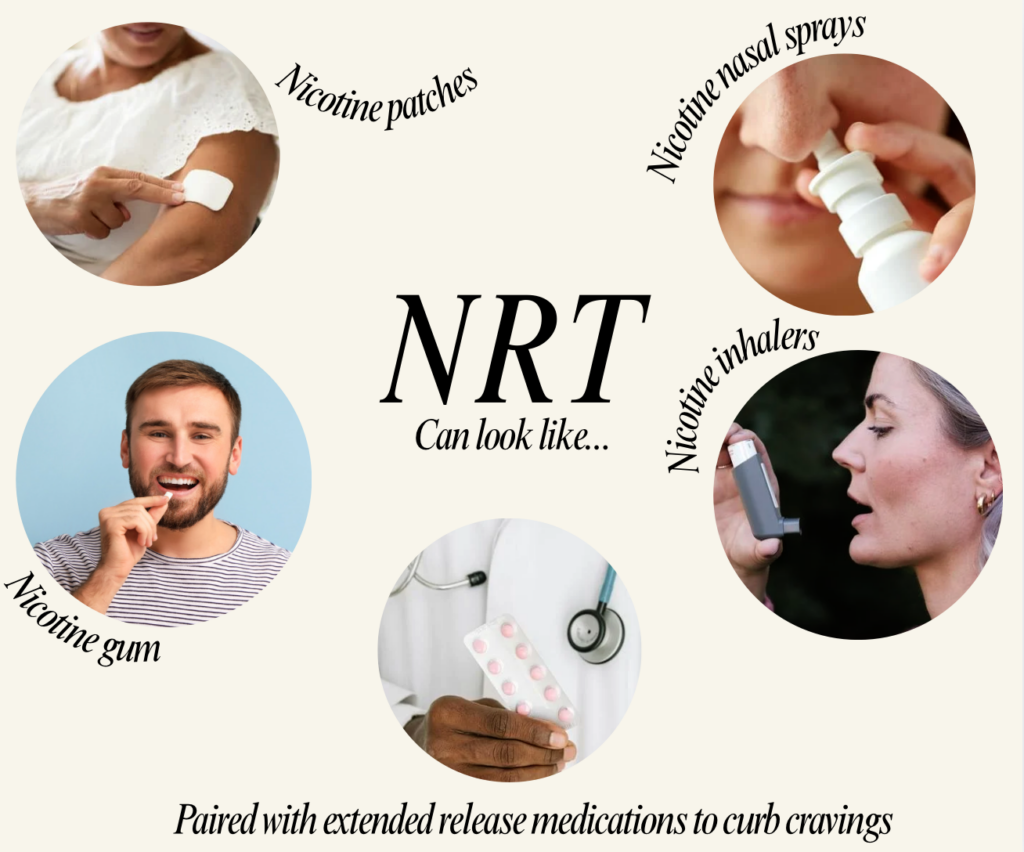
Nicotine Replacement Therapy, or NRT, helps make quitting smoking more manageable by giving your body a controlled amount of nicotine without the harmful chemicals found in cigarettes. This can reduce the discomfort you may feel when you stop smoking.
There are five types of NRT approved by the U.S. Food and Drug Administration for quitting smoking. All contain nicotine as the active ingredient. The most common options are nicotine patches, gum, and lozenges, which are available over the counter without a prescription.
Unlike cigarettes, NRT products deliver nicotine without exposing you to the hundreds of toxic chemicals in tobacco smoke. By doing so, they help reduce cravings and ease withdrawal symptoms.
When used as directed, NRT can provide enough nicotine to prevent intense cravings and severe withdrawal. However, it’s normal to still experience some urges or mild discomfort while quitting. The good news is that support, counseling, and additional strategies can help you manage those moments successfully.
Many people find that combining products works especially well. For example, using a long-acting nicotine patch along with a short-acting option like gum or lozenges can provide steady support while also helping with sudden cravings.
Over time, you can gradually lower the amount of nicotine you use. This allows your brain and body to adjust step by step, helping you build confidence and learn how to live comfortably without smoking.
Quitting is a process, and NRT can be a helpful tool along the way.
There are two prescription pill medications approved by the U.S. Food and Drug Administration to help people quit smoking: bupropion and varenicline.
Bupropion works on chemicals in the brain that are linked to nicotine addiction. It can help reduce cravings and ease withdrawal symptoms, making it more manageable to stop smoking.
Varenicline works in a different way and has two key effects. First, it partially activates the same areas of the brain that nicotine targets. This helps reduce cravings and withdrawal symptoms. Second, it blocks nicotine from fully attaching to those same brain receptors. Because of this, if you do smoke while taking varenicline, you may not feel the same sense of satisfaction or “buzz.” Over time, this reduced reward can make it easier to quit and stay smoke-free.
Both medications can be effective tools when combined with support, counseling, or a quit plan.

The New York State Quitline
The New York State Quitline provides information, printed materials, and expert quit coaching by phone, text, or online chat. Eligible New Yorkers who smoke cigarettes or vape tobacco or nicotine can also receive free starter kits of nicotine replacement therapy (NRT).
Better health to every corner of Greene.
Call, text, or visit the free and confidential New York State Quitline at 1-866-NYQUITS (1-866-697-8487), text (716) 926-4422, or visit online at https://www.nysmokefree.com/ to chat and for information and support in breaking free from tobacco and nicotine. To enroll in confidential texting programs which include weekly guidance for skill building, text QUITNOW (English) or DéJELO YA NY (Spanish) to 333888, or visit DropTheVape.org.